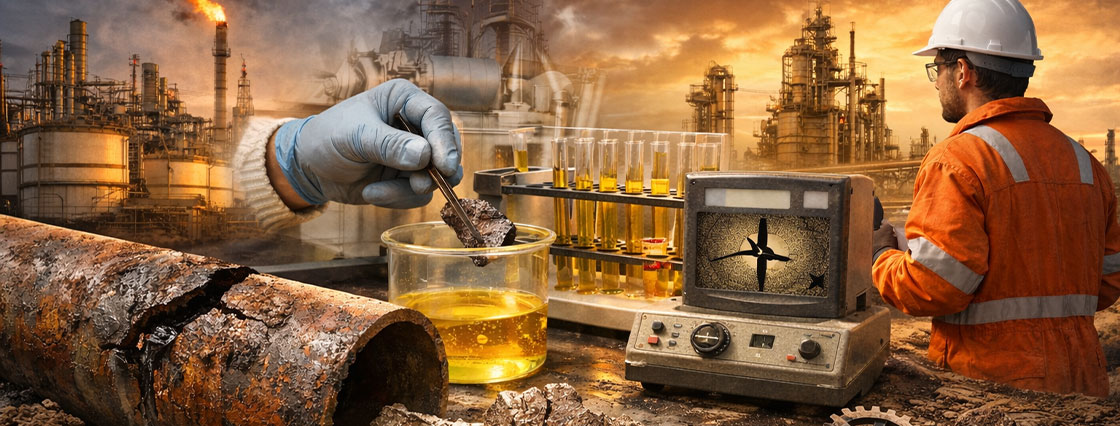
Equipment used in the oil and gas industry is exposed to extremely harsh operating conditions. One of the most critical conditions is sulfur-containing environments. Sulfide corrosion occurring in these environments can significantly reduce the durability and integrity of materials.
Sulfide corrosion may cause cracking and sudden failures, especially in pressure vessels, pipelines, and production equipment.
The Importance of Sour Service Corrosion
Sulfur-containing environments involve high operational risks. Therefore, controlling sour service corrosion is essential for:
- Maintaining occupational and operational safety
- Reducing environmental risks and potential leakage incidents
- Extending equipment service life and reliability
Failure to detect this type of corrosion at an early stage may result in serious operational losses and unexpected shutdowns.
What Is Sour Service Corrosion Testing?
Sour service corrosion testing consists of specialized test methods used to evaluate the resistance of materials against sulfur-containing environments.
These tests help organizations:
- Determine resistance to cracking and material degradation
- Analyze corrosion-related damage risks
- Select suitable materials for harsh operating environments
Sour Service Corrosion Test Methods
The most commonly used sour service corrosion testing methods include:
1. Sulfide Cracking Resistance Tests
These tests evaluate the resistance of materials against crack formation in sulfur-containing environments.
2. Stress Corrosion Testing
The corrosion behavior of materials under mechanical stress and harsh environmental conditions is analyzed.
3. Material Compatibility Testing
These tests determine whether equipment and materials are suitable for use in sour service environments.
Prevention of Sour Service Corrosion
The following methods are commonly applied to reduce the risks associated with sour service corrosion:
- Selection of corrosion-resistant materials
- Protective coating applications
- Regular inspection and testing procedures
- Compliance with international standards and industry requirements
These preventive measures improve equipment safety, operational performance, and long-term reliability.
Benefits of Sour Service Corrosion Testing
An effective sour service corrosion testing program helps organizations:
- Prevent equipment failures and unexpected shutdowns
- Improve occupational and operational safety
- Reduce maintenance and repair costs
- Ensure continuous and reliable operation
Conclusion
Sulfur-containing environments create serious risks for industrial systems and critical equipment. For this reason, proper management of sour service corrosion and related testing processes is essential for operational safety and long-term asset integrity.
With professional inspection and testing services, organizations can reduce operational risks and improve equipment reliability. For detailed information and expert support, contact GCA Conformity Assessment.

GCA provides comprehensive inspection and compliance services.
Copyright 2026 Weonsoft ® - All Right's Reserved.