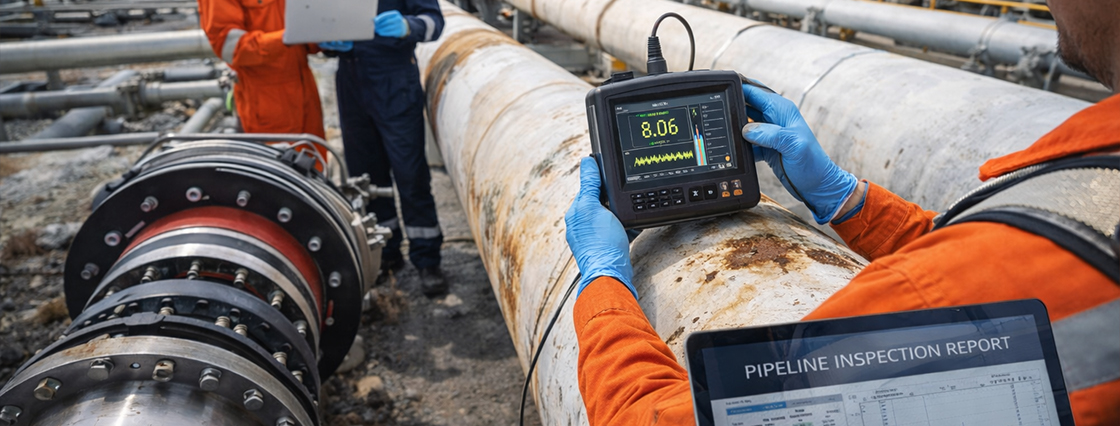
What Is Pipeline Inspection?
Pipelines are critical infrastructure in energy, industrial, and municipal systems. Pipeline inspection is a systematic process used to assess pipeline integrity, safety, and compliance.
Regular pipeline inspections help detect corrosion, leaks, and structural issues early, preventing costly failures and environmental damage.
Types of Pipeline Inspections
Oil and Gas Pipelines
Oil pipeline inspection and oil and gas pipeline inspection are essential for maintaining safe operations in high-risk environments.
Oilfield pipeline inspection is also widely used to monitor pipelines in production sites.
Gas and Hydrogen Pipelines
Gas pipeline inspection ensures safety in systems carrying pressurized gases. With the rise of clean energy, hydrogen pipeline inspection service is becoming increasingly important.
Offshore and Subsea Pipelines
Offshore pipeline inspection and subsea pipeline inspection are critical for pipelines operating in marine environments.
Advanced marine pipeline inspection solutions are used to address the unique challenges of underwater systems.
Sewer and Infrastructure Pipelines
Beyond energy, sewer pipeline inspection is crucial for urban infrastructure maintenance, helping identify blockages and structural issues.
Pipeline Inspection Process
A typical inspection pipeline process includes:
1. Risk Assessment and Planning
Identifying potential risks and defining inspection scope.
2. Field Inspection
Onsite evaluation of pipeline condition.
3. Testing and Monitoring
Using advanced technologies to detect defects and corrosion.
4. Reporting and Maintenance
Providing detailed reports and recommending corrective actions.
Importance of Pipeline Inspection Services
Professional pipeline inspection services oil and gas industry provide:
- Enhanced operational safety
- Reduced environmental risks
- Regulatory compliance
- Improved system reliability
Benefits of Pipeline Inspections
Implementing regular pipeline inspections ensures:
- Extended asset lifespan
- Reduced downtime
- Increased efficiency
- Improved safety standards
Conclusion
Effective pipeline inspection strategies are essential for maintaining safe and reliable operations across industries.
For expert inspection and conformity services, you can contact GCA Conformity.

GCA provides comprehensive inspection and compliance services.
Copyright 2026 Weonsoft ® - All Right's Reserved.